
The complete guide
Choosing a Round Plastic Drain Grate That Actually Fits
The puddle that won't go away
You notice it after heavy rain. A patch of water sitting on the path near the downpipe, taking hours to soak away when it used to disappear in minutes. Or a drain by the back door with no cover at all, just a dark hole that catches leaves, cigarette ends and, once, a child's ball.
Both problems trace back to the same small part. The gully grid. It's the cheapest component in the whole drainage run and the one most likely to be broken, missing or buried under two years of compacted leaf mulch. Replacing it costs less than a takeaway and takes about a minute.
This guide walks through how a round drain grate works, how to check the size, what plastic gets you compared with metal, and how to keep the thing doing its job once it's in.
What a gully grid actually does
A gully is the chamber below your drain opening. It collects surface water and sends it into the drainage system, and it usually has a trap that holds a small amount of water to block odours from travelling back up.
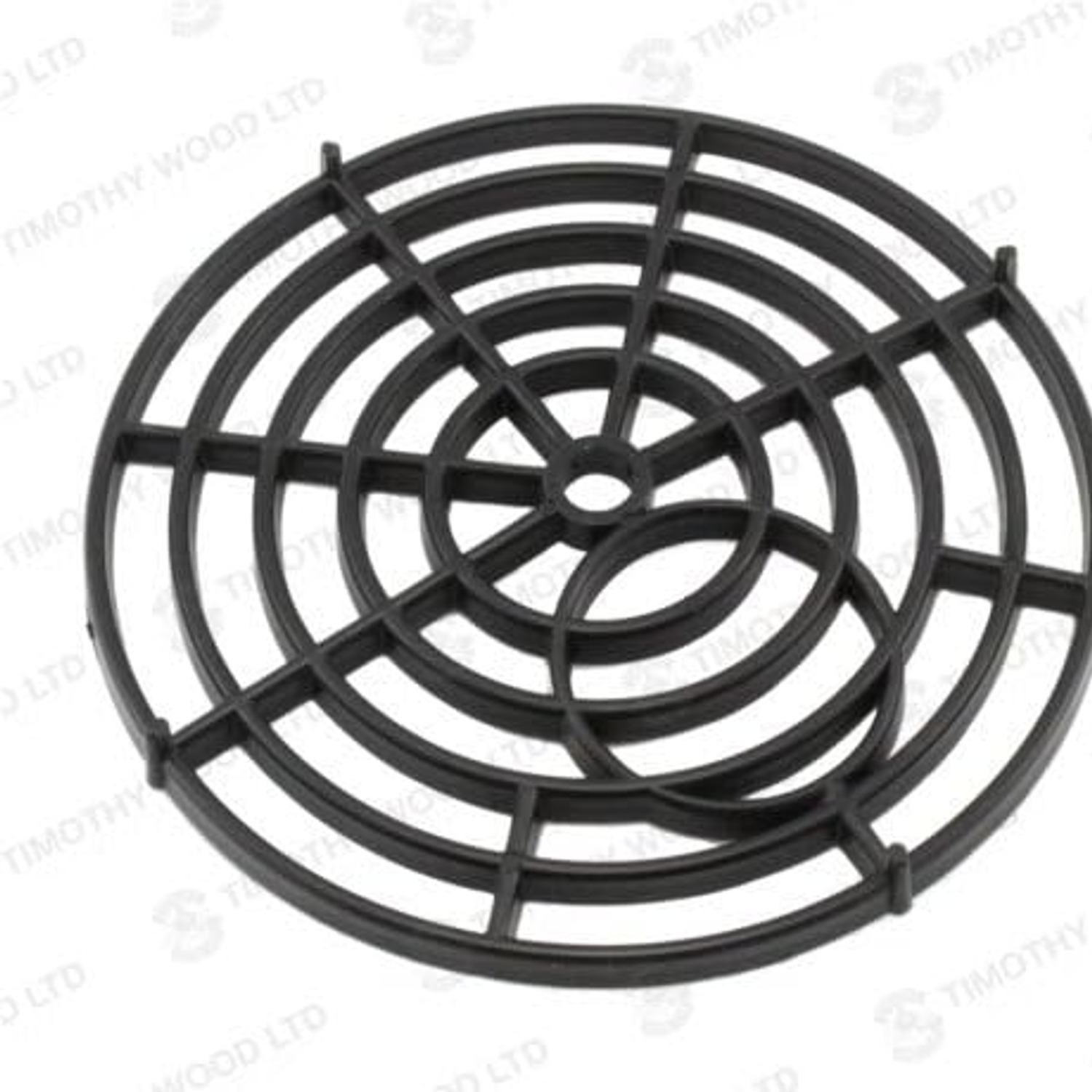
The grate on top is a filter. It has one purpose, which is to let water down and keep solids out. Leaves, twigs, moss, grit swept off the path, bits of gravel that migrate off a driveway. All of that would otherwise wash into the gully and settle at the bottom until the outlet chokes.
An open grid pattern is deliberately generous. Rainwater during a downpour arrives fast, and a grate with narrow slots would back up. So the openings are wide enough to swallow a heavy shower and small enough to stop the debris that causes real blockages. Very fine grit will still pass through, and that's fine, because a gully is designed to let a small amount of silt settle where you can scoop it out.
Getting the size right
This is where most people go wrong, and it's easy to avoid.
The Stadium grate here's the 7 inch round size, measuring 17.8cm across. Take a tape measure to your existing opening and check the diameter across the widest point of the rim. If you still have the old grate, measure that instead, edge to edge.
Round openings and square openings aren't interchangeable. A round grid will rattle around in a square frame and a square grid won't seat in a round one. There's no clever workaround, so confirm the shape first, then the diameter.
If you're within a few millimetres, it'll usually seat fine, because gully rims have a lip that the grate rests on. If you're out by a centimetre or more, look for a different size rather than forcing it. A grate that sits proud is a trip hazard and one that drops through is worse than no cover at all.
Plastic against metal
Metal grates have their place, mainly where vehicles cross the drain and a proper load rating is required. Outside that scenario, plastic wins on most counts for a domestic gully.
It doesn't rust. That single fact solves an ongoing annoyance, because a corroding steel or cast iron grate bleeds orange down light stone, concrete and render, and no amount of scrubbing fully removes it. Black plastic sits there and stains nothing.
It's light. Lifting it out to clear the gully is a one-handed job, not a wrestling match with a screwdriver as a lever. That matters more than it sounds, because a cover you can remove easily is a cover you actually will remove and clean.
It doesn't seize. Metal grates and metal frames corrode together, and after a few winters some of them are effectively welded in place by rust.
The trade-off is load. This product record doesn't state a load rating, so treat it as a pedestrian and garden grate rather than a driveway drain grate for cars. If a vehicle will roll over the drain, buy a grate with a published load class from a range that states one.
Where these get used
The common spots are predictable, but it's worth running through them so you can count how many you need.
Downpipe gullies at the corners of the house are the classic case. Rainwater comes off the roof at volume, and if a leaf mat forms on the grid you get overflow washing down the wall.
Patio and paved area drains take a lot of sweepings, garden soil and moss. A removable drain grate here saves you digging sludge out of the chamber with a trowel later.
Side returns and alleyways collect wind-blown leaves, which pile up against anything solid. An open grid lets you see the pile forming rather than discovering the blockage after it rains.
Garages, outbuildings and utility areas often have a round floor gully. The same 7 inch cover works there and stops tools, screws and small parts vanishing down the hole.
Yard and outdoor tap drains benefit too, mostly because the grid keeps stones out.
If you've several openings around one property, matching them all to the same black grid makes the outside look considered rather than patched together. At this price it's a cheap tidy-up.
Fitting it
There's not much to it. Sweep the area around the drain so grit doesn't fall in while you're working. Lift out the old grate, or use a screwdriver on the edge if it's stuck, and set it aside.
Look into the gully while it's open. This is your one easy chance to clear it. Scoop out leaf sludge and silt with a gloved hand or a small trowel, drop it in the bin rather than back on the path, and run a hose down for a few seconds to check the water disappears.
Then set the new grate on the rim. It should sit flat and level with no rocking. Press each edge with your foot to check. If it tips, something is under the lip and needs clearing.
No tools, no fixings, no cutting.
Keeping it working
The whole point of a removable cover is that maintenance is quick. A few habits keep it doing its job.
Sweep the top whenever you sweep the path. Thirty seconds of brushing stops the slow build-up that eventually becomes a mat.
Lift and rinse every few weeks. Hose the grid off, or scrub it with warm soapy water and a stiff brush if moss has taken hold. Skip solvents and strong chemicals on plastic.
Step it up in autumn. Leaf fall is when nearly every drainage complaint starts. Weekly checks through October and November prevent almost all of them.
Clear before a freeze. A blocked grid holding standing water can freeze solid and lift, so it's worth a look before a cold snap.
Over years of sun and weather, outdoor plastic does age. Keeping the surface clear of abrasive grit and standing debris helps. Stadium supplies this grate with a 12 month manufacturer warranty against manufacturing faults.
The short version
Measure the diameter of your round gully opening. If it's around 7 inches, this 17.8cm Stadium grate drops straight in with no tools.
Choose plastic for garden, patio and pedestrian drains, where it won't rust or stain your paving and stays light enough to lift by hand. Choose a load-rated metal grate instead if vehicles cross the drain, since no load class is stated for this one.
Then use the removable design. Lift it, clear the gully underneath, rinse the grid and put it back. Do that a few times a year and the puddle by the downpipe stops being a recurring problem.