
The complete guide
How to Choose a Cast Iron Drain Cover That Actually Fits
The problem with an open gully
An open drain is a magnet for everything you don't want in it. Leaves land in it. Grit washes into it off the path. Bits of packaging blow in from the street and settle at the bottom. None of that matters much on day one. Over a season it turns into a soggy plug that sits in the trap and slows the water down.
You usually notice it the same way. Rain comes down hard, and instead of disappearing, water spreads out around the drain and creeps toward a doorway. By then the blockage is already established, and clearing it means gloves, a bucket and a bad afternoon.
A gully grid stops most of that from happening in the first place. It's a simple metal grate that sits over the opening. Water goes through the slots. Leaves, litter and stones stay on the surface, where you can sweep them away with a brush.
What this cover actually is
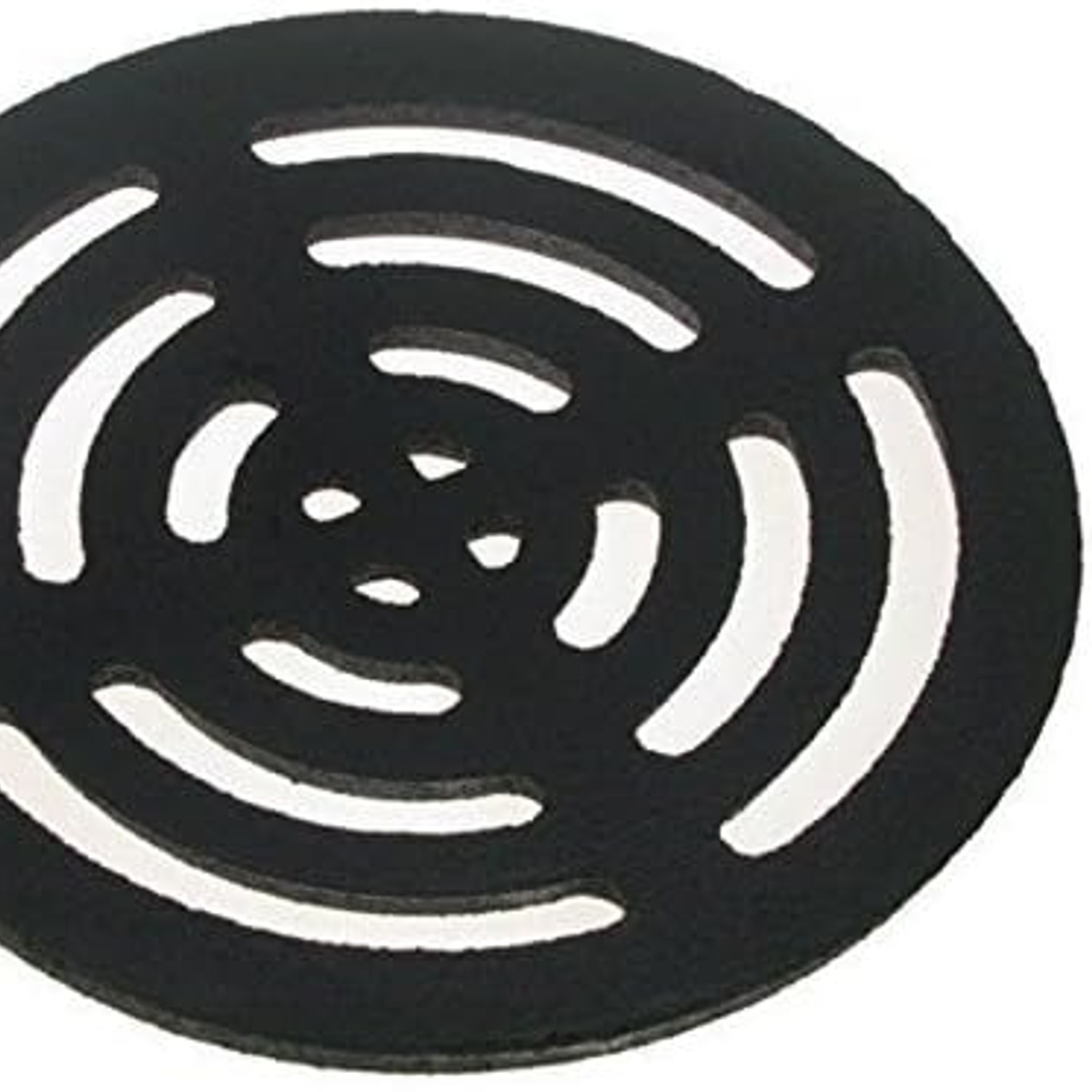
This is a round cast iron gully grid finished in black. The listed dimensions are 17.5cm across and 1cm high, and the manufacturer part number is given as 7 inch, which is the imperial way of saying the same thing. It comes as a single grid, with no frame or fixings included, because it's designed to drop into the rebate of an existing gully.
The finish is a black powder coating over the metal. That does two jobs. It gives the iron a layer of protection against constant wet, and it keeps the look tidy so the grate reads as part of the paving rather than a bright patch of raw metal.
The grid is removable. That sounds obvious, but it's the feature that keeps this style of cover useful year after year. You can pick it up, clear the trap underneath, rinse it and drop it back.
How a gully grid works
The gully itself does the clever part. Below the opening there's usually a trap that holds a small amount of water, and that water seal is what stops drain smells rising into your yard. The grid doesn't create that seal and can't replace it. Its job is purely to filter what falls in.
Slot size is the balance point. Wide slots pass water fast but let more debris through. Narrow slots catch more rubbish but can clog on the surface during heavy leaf fall. A cast iron grate of this size sits sensibly in the middle, which is why the pattern has barely changed in a century.
Weight matters too. A light cover can be lifted by a gust of wind or kicked out of position by a wheelie bin. Cast iron stays put, and that reliability is half of why people still choose the best cast iron drain cover over cheaper alternatives.
Getting the size right
This is where most orders go wrong, so it's worth two minutes with a tape measure.
Lift out the existing cover if there's one. Measure straight across the opening at its widest point, then take a second measurement at ninety degrees. If both readings land near 175mm, this grid is your size. If one reading is noticeably longer than the other, your gully is oval or square and needs a different shape.
Also look at the rebate, the little ledge the old cover sat on. A grid needs that ledge to sit flush. If there's no rebate and the cover would just perch on top of the paving, you'll get a raised lip that trips people and shifts underfoot. In that case you want a cover with its own frame, or a bit of masonry work to create a proper seat.
Who this suits
It suits anyone replacing a cracked, rusted or missing cover on a domestic round gully. That includes the drain at the foot of a downpipe, the one beside a back door, and the one in the corner of a yard that has been sitting open since the last one broke.
It suits landlords and property managers who want something that lasts through several tenancies without attention. It suits gardeners who are tired of scooping leaves out of a trap every autumn.
It's less suitable where vehicles cross the drain. No load rating is specified for this product, and driveway gullies that take car weight should use a cover with a stated load class. If a van parks over it, buy the rated version.
Cast iron against the alternatives
Plastic covers are cheap and light. They're fine in sheltered spots and easy to carry, but years of sun and frost can make them brittle, and they lift too easily in wind.
Galvanised steel grates are lighter than cast iron and resist rust well, though they can look industrial next to domestic paving.
Cast iron gives you mass and a long service life. The trade-off is that iron will rust if the coating is damaged and the chip is ignored. That's not a serious problem, just a maintenance note. A wire brush and a tin of exterior metal paint deals with it in ten minutes.
Fitting it
There's almost nothing to it. Clear the old cover and any loose debris from the rebate. Brush the ledge clean so the new grid sits flat. Lower it in and press down at each edge to check for rocking.
If it rocks, something is caught underneath or the rebate has an old mortar lump on it. Chip that off and try again. A grid that rocks will keep moving and eventually wear the seat.
If the fit is slightly loose, that's usually fine outdoors, since the weight holds it. If it's loose enough to slide sideways, you're better off with the next size up or a mortared frame.
Keeping it working
Set a rough routine. During autumn, sweep the surface every couple of weeks so the slots stay open. Twice a year, lift the grid out and check the trap underneath. Silt settles there quietly and reduces the flow long before it blocks completely.
Cleaning is straightforward. Brush the debris off, rinse the grid with a hose, and give the trap a scoop or a flush. Let the grid dry before refitting so you aren't sealing wet grit against the coating.
Skip acidic drain cleaners on the metal itself. They're formulated for pipework, not painted iron. Water and a stiff brush handle almost everything, and for a stubborn film of algae, a little detergent finishes the job.
Watch for chips. A small bare patch will show orange after a wet winter. Sand it back, prime it, paint it, and the coating carries on protecting the rest.
The short version
If you've a round outdoor gully around 175mm across and it needs a cover, this is a straightforward answer. It's heavy enough to stay put, coated to handle weather, and removable so you can actually clean the drain instead of ignoring it.
Measure your opening first. Check whether vehicles drive over that drain, and if they do, choose a load-rated cover instead. Otherwise, drop this in, sweep it now and then, and you can stop thinking about that corner of the yard.