

The complete guide
Rat Drain Guards Explained, How to Choose and Fit One
The problem nobody sees until it's inside the house
Most people picture rats coming in through a gap in a shed wall or a hole under a fence. Sometimes they do. But a large share of rat problems in houses, flats and commercial units start below ground, in the drains. The sewer network is warm, sheltered and endlessly supplied with food. It runs directly under the pavement and connects, by pipe, to every single building on the street.
Rats swim well and climb better than most people expect. If a pipe collapses, if an old branch was capped badly during a renovation, or if a joint has come apart with ground movement, the rats find it. They follow the pipe and come up wherever it opens, which might be a redundant toilet connection, a cracked section under a floor, or a gully that has lost its trap.
This is the reason a rat problem can look so baffling. The kitchen is spotless. Bins are sealed. No obvious holes anywhere. Yet the noises in the wall keep coming back a few weeks after each treatment. When that pattern shows up, the drain is the first place a decent pest controller looks.
What a rat drain guard does
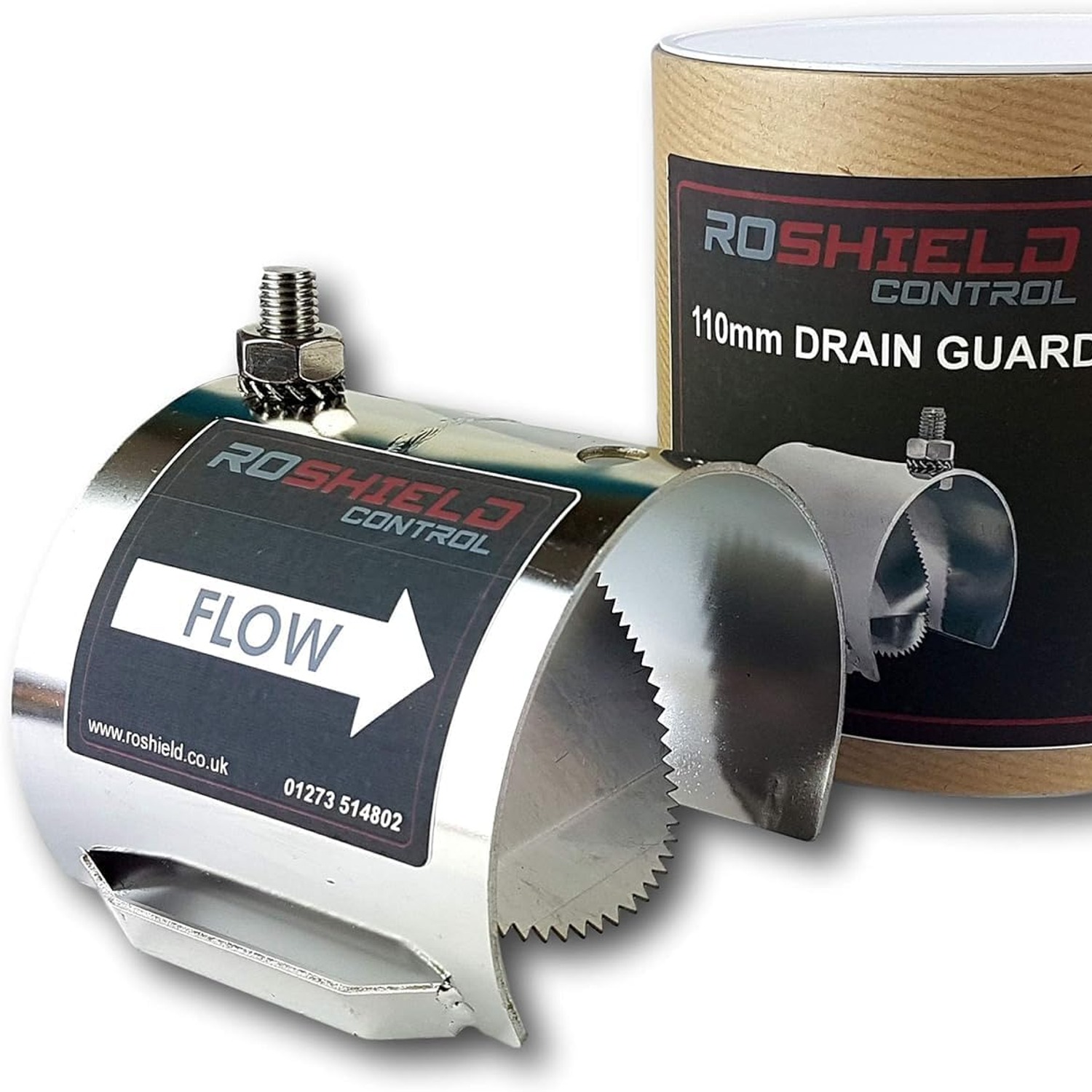
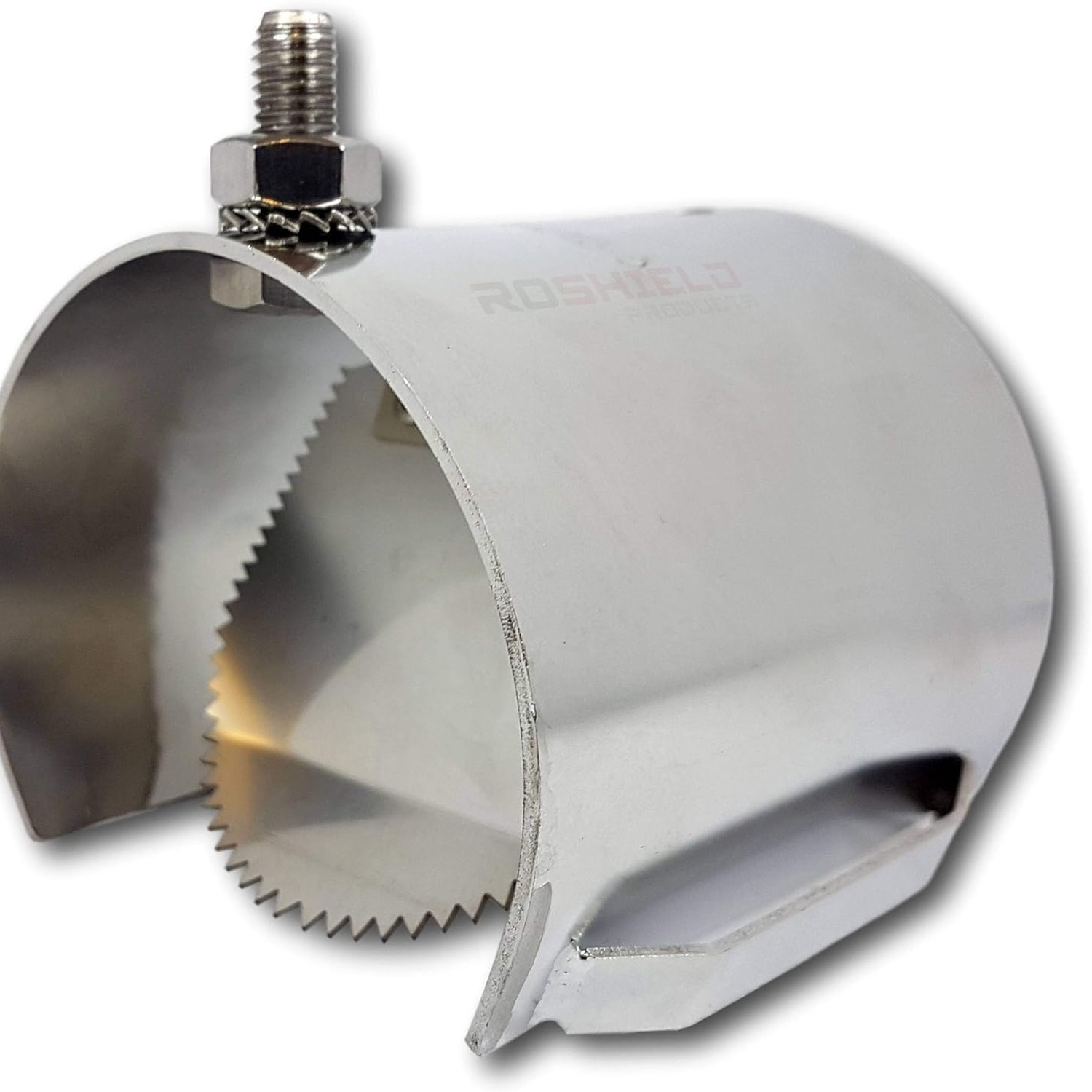
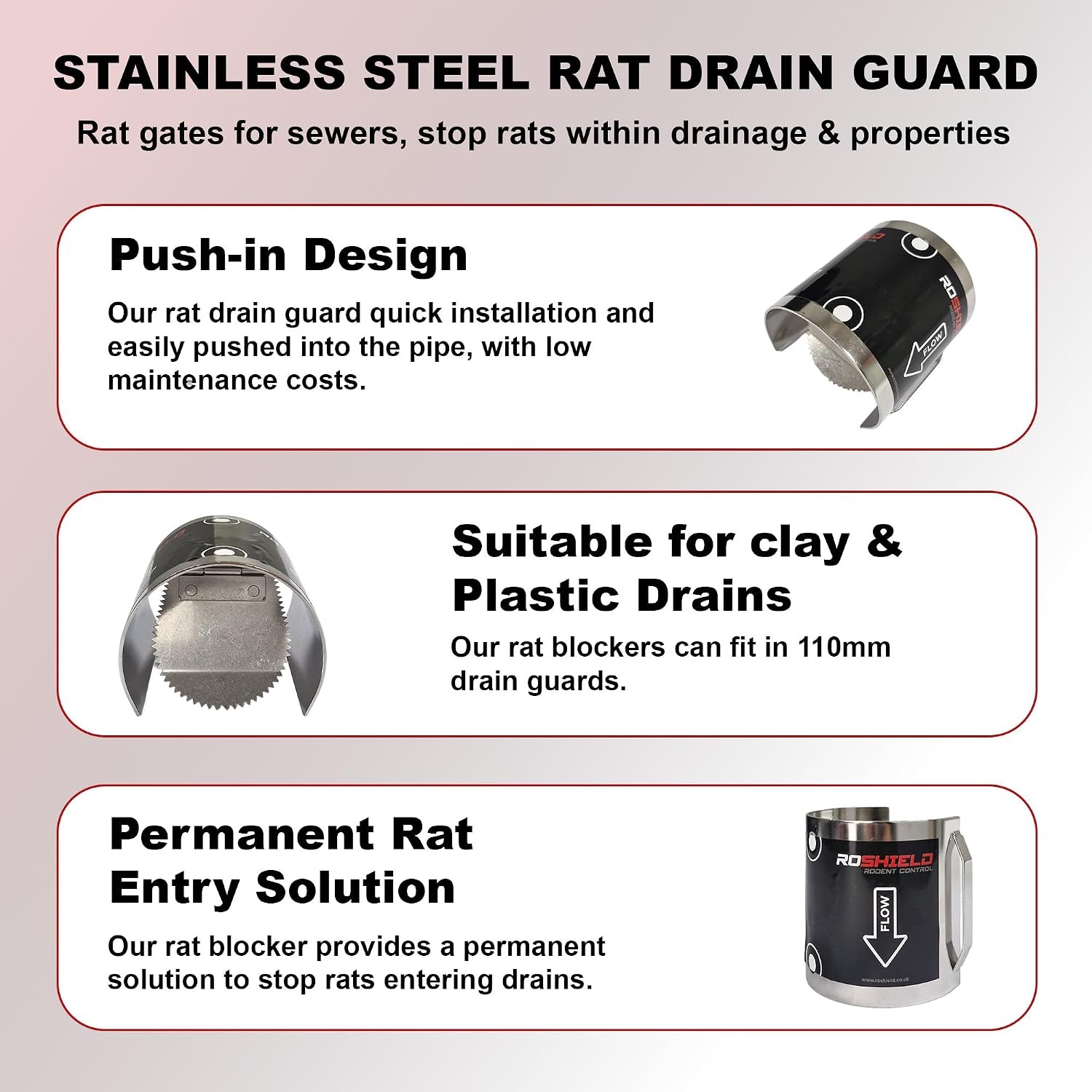
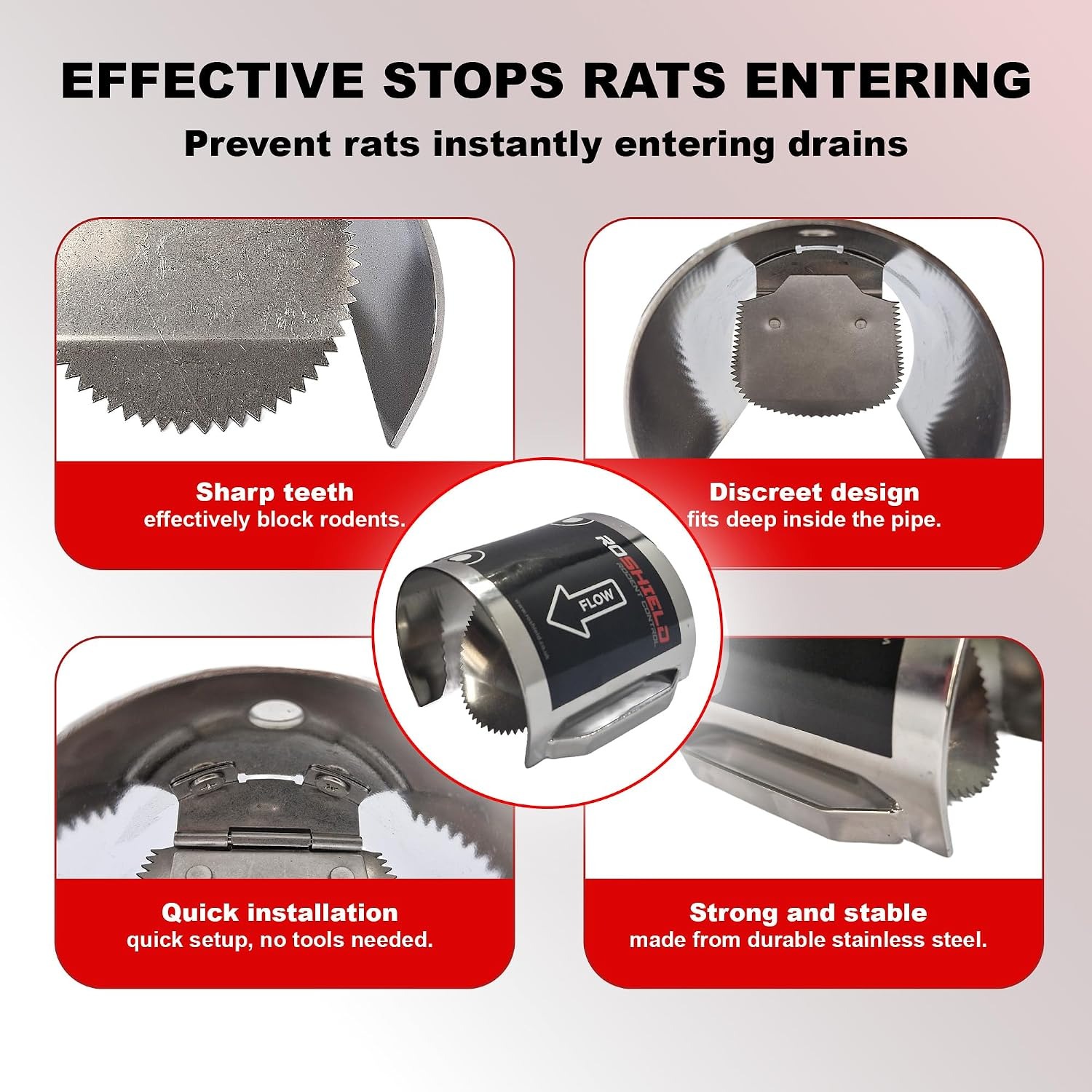
A rat drain guard is a physical block fitted inside the drainage system. It has a hinged barrier that only opens one way. When waste water flows down the pipe, the pressure of the flow swings the barrier open and everything passes through as normal. Once the flow stops, the barrier settles back against its frame.
Push from the other side, which is what a rat does when it travels upstream from the sewer, and the barrier stays shut. There's no gap to squeeze through and nothing soft to gnaw. That's the whole idea. Rather than trying to kill or deter animals that'll simply be replaced by the next lot, you remove the route they use.
The Roshield unit is installed within the inspection chamber, which is the access pit with the removable cover in the garden, drive or yard. You can position it at the entrance or the exit of the pipe, whichever suits your chamber, and the bolt supplied with it can be switched over so the barrier hinges the correct way for your flow.
Why the metal matters
Anything you put inside a drain lives in a nasty environment. It's wet almost all the time, occasionally fully submerged, and exposed to detergents, grease, and whatever else gets flushed. Cheap steel rusts, and once a hinge seizes, a one-way flap becomes either permanently open (useless) or permanently shut (a blockage waiting to happen).
These guards are manufactured in the UK from 316 stainless steel, which is the marine grade. That specification is chosen exactly because of the damp conditions found in drainage systems. It's also why the same product turns up in professional pest control work rather than only in DIY use. A marine grade stainless drain guard isn't a luxury here, it's the minimum sensible spec.
There's a second advantage to metal that people forget. Rats gnaw constantly, and they can work through plastic, lead and soft mortar given enough time. They can't work through stainless steel. A plastic mesh cover over a gully might slow them for a season. It won't hold.
Who it suits
Homeowners with a recurring rat problem are the obvious group. If you've had two or three rounds of treatment and the animals keep returning, a drain rodent barrier is the logical next step. It changes the situation permanently rather than resetting the clock.
Landlords and letting agents like it for a different reason. It's a one-time job that can be recorded, signed off and forgotten, instead of an ongoing service contract that has to be renewed and explained to tenants. Older housing stock, especially properties with Victorian drainage, benefits most, because those systems have had a century or more to develop cracks and abandoned branches.
Commercial sites, particularly food premises, have both a pest problem and a compliance problem. A visible, permanent inspection chamber rat guard is easy to point to during an audit. For larger commercial pipework, the 150mm variant is usually the right choice rather than this 110mm one.
Choosing the right size
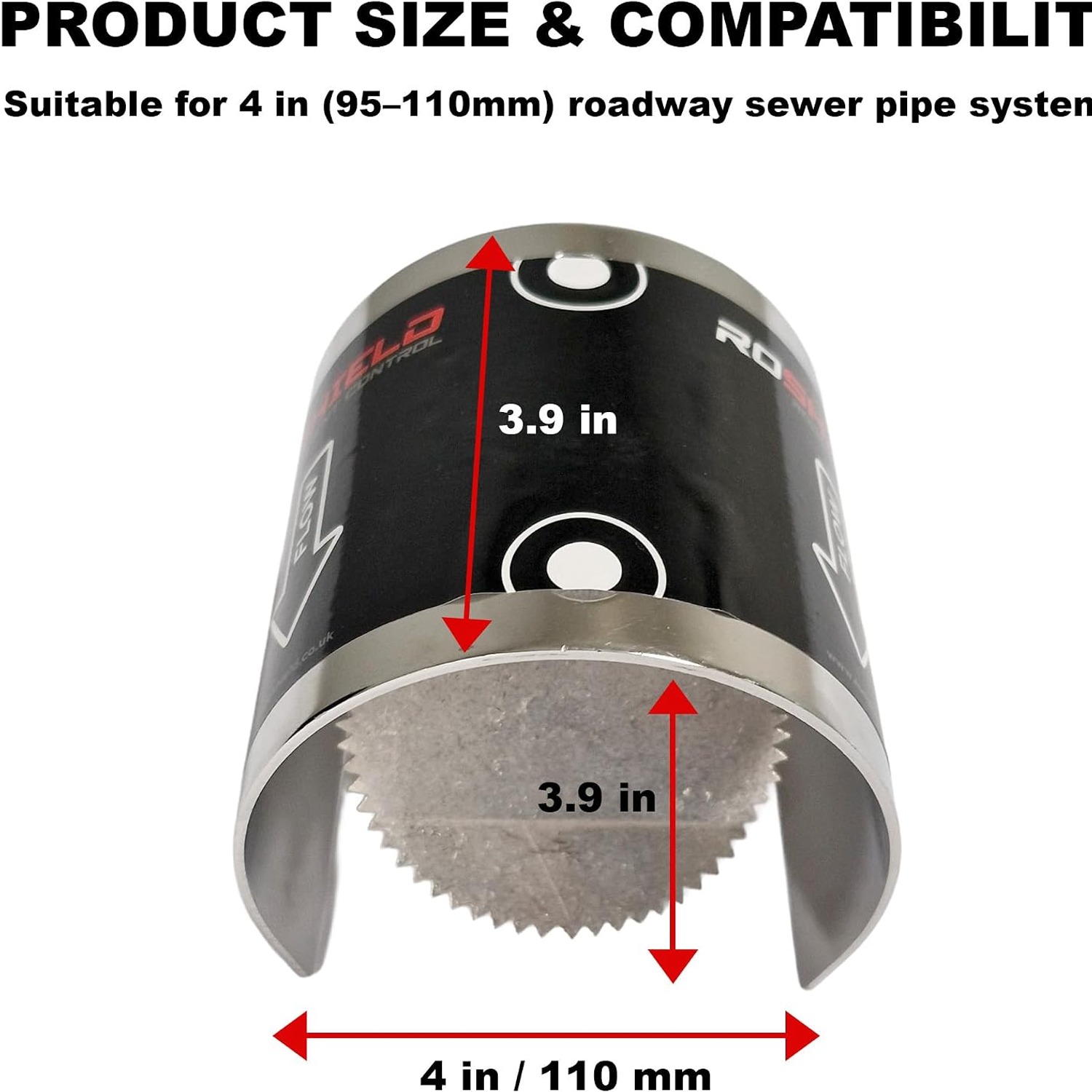
This is the part people get wrong, and it's easy to get right. Take the cover off your inspection chamber and look at the pipe. Standard modern soil and drain pipes are 110mm, which is the 4 inch size, and that's what this listing covers. It'll also fit into 100mm Victorian drains, which is handy because a lot of older properties fall exactly into that gap.
If your pipe is noticeably larger, you're probably looking at a 150mm run, and Roshield make a 6 inch version for that. Don't try to force a smaller guard into a bigger pipe or pack it out with anything. A guard that doesn't seat properly is a guard that lets rats past.
Also count your routes. One guard protects one pipe. Properties with two chambers, or a separate connection for a rear extension, need one unit per route. It costs a little more up front and it saves the frustration of sealing one door while leaving another wide open.
Fitting it without drama
You don't need special training. The instructions are included, there's a support video, and technical help is available on request. What you do need is sensible access. Lift the cover with proper lifting keys, keep children and pets well away from the open chamber, and wear gloves.
Before you fit anything, clear the pipe mouth of grease and silt so the guard seats cleanly. Check which way the water flows, because that determines which side the bolt goes on. Fit the guard, then run water through and watch that it opens and closes as it should. Replace the cover firmly.
If the pipe itself is broken, get that repaired first. A drain guard isn't a patch for a collapsed section, and fitting one over damaged pipework just hides a fault that'll get worse.
Living with it afterwards
Once it's in, there's no long-term maintenance. No batteries, no bait, no scheduled service. Even so, it's worth a look once or twice a year, and especially after very heavy rain or after any blockage upstream.
You're checking for one thing mainly: something caught on the hinge that stops the barrier closing fully. Wet wipes are the usual culprit, along with congealed fat. Clear anything you find, rinse with clean water, and put the cover back. Avoid solvents and aggressive scrubbing, since neither is needed on stainless steel.
If you're having other drainage work done, mention the guard to the contractor so they know it's there. It can be unbolted for a survey and refitted afterwards.
The short version
Rats come up drains far more often than people realise, and no amount of tidying above ground fixes that. A one-way flap fitted in the inspection chamber lets your waste out and keeps the rats where they belong. This Roshield unit is the 110mm size, made in the UK from 316 marine-grade stainless steel, needs no power, and asks for nothing once it's installed.
Measure your pipe, count your routes, fit it properly, and check it now and then. That's the whole job.