
The complete guide
How to Choose a Round Drain Grate for an Outdoor Gully
The problem with an open gully
Most people ignore the drain outside the back door until the day water starts pooling around it. Then it becomes urgent. The reason is almost always the same. An open gully has been swallowing leaves, moss, grit off the path and the odd bottle cap for a couple of years, and all of that has settled in the trap or the bend below.
Clearing a blocked gully is a horrible half hour with a pair of gloves and a bucket. Stopping it filling up in the first place costs very little. A round drain grate sits over the opening, catches the debris on top where you can sweep it away, and lets the water through underneath.
That's the whole job. It isn't clever, but it saves a lot of bother.
What this grate actually is
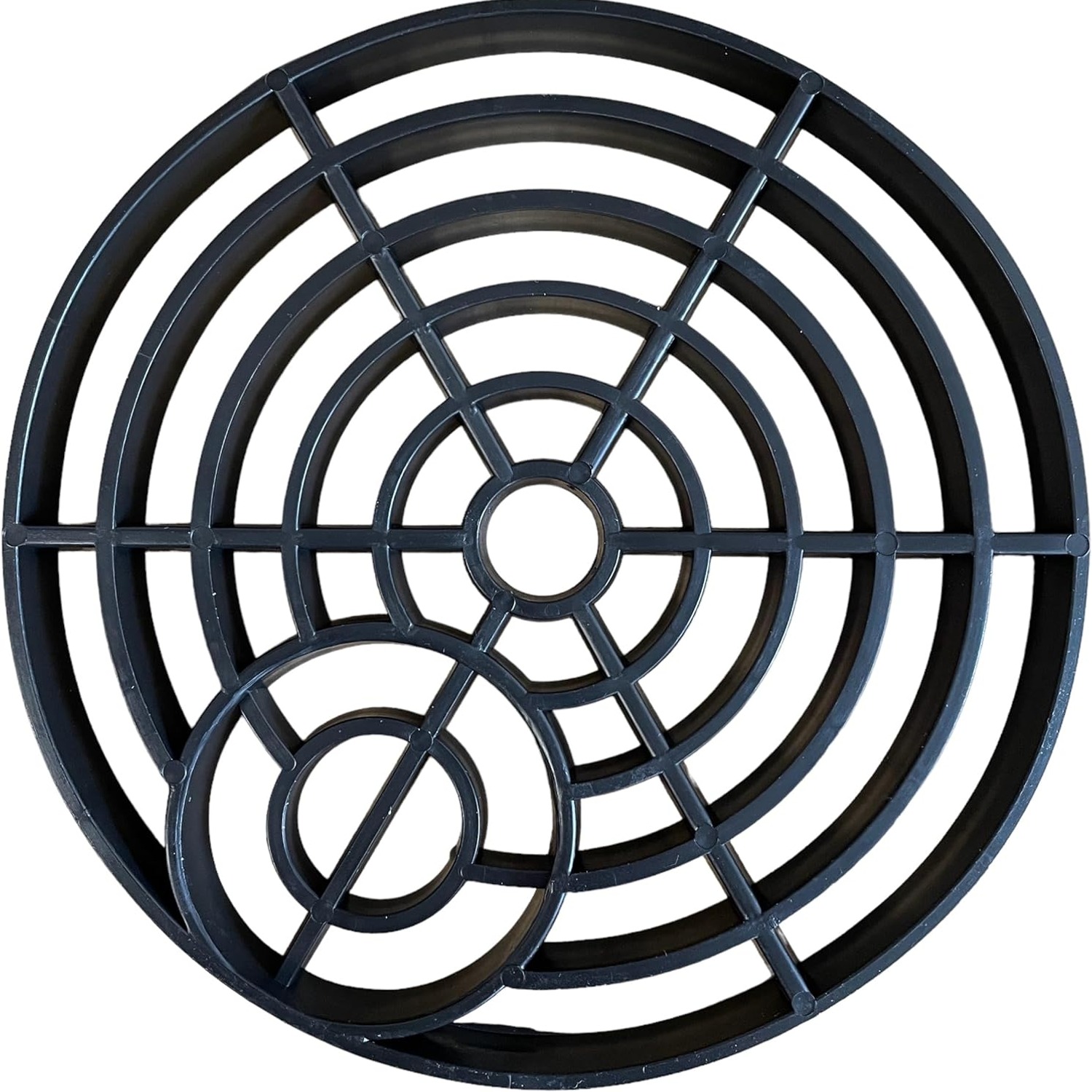
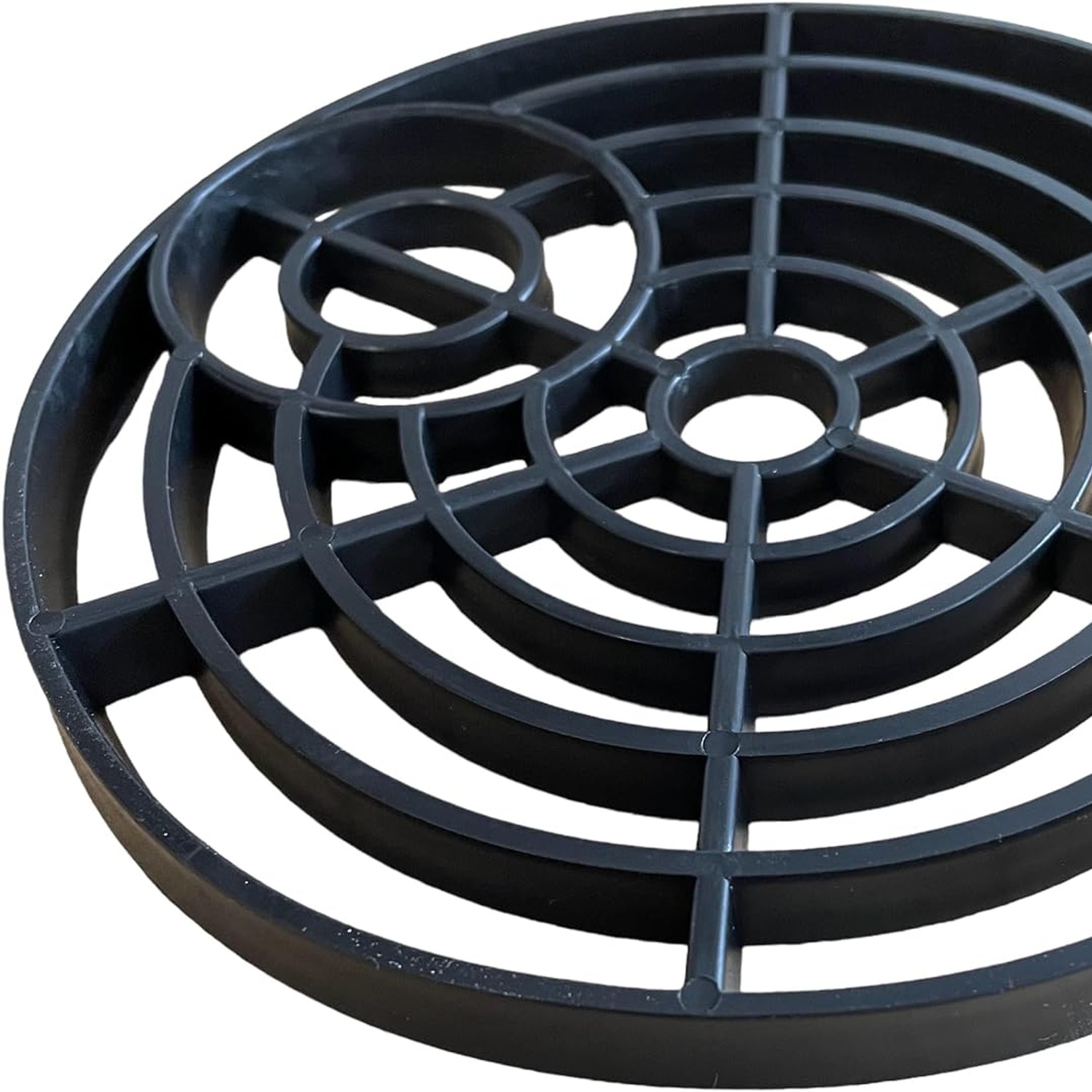
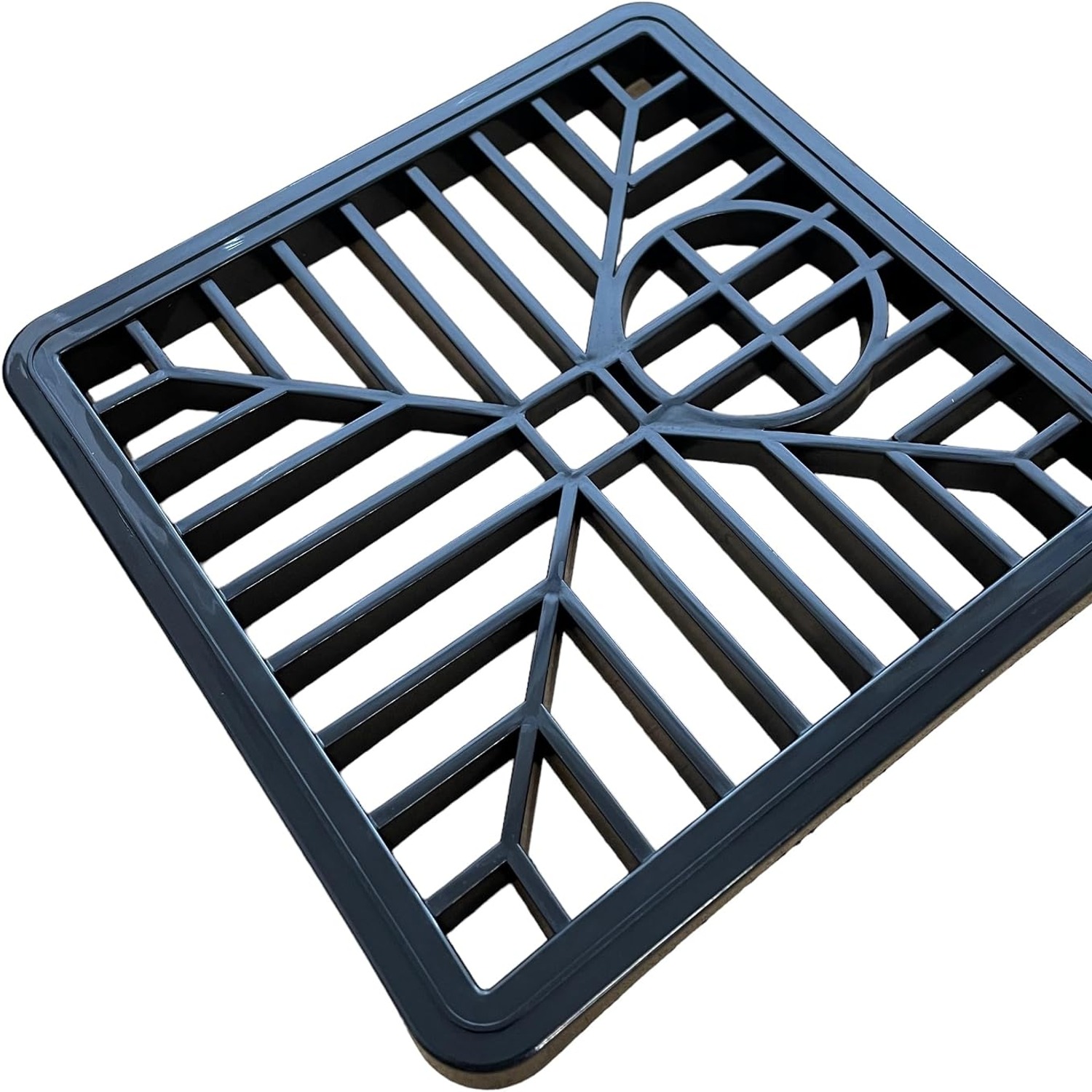
This is a 150mm gully grid, sized for a standard 6 inch drain. The moulding measures 150mm x 150mm x 10mm, which is 15 x 15 x 1 cm, and it weighs 0.05 kg. It's made from polyvinyl chloride, a rigid plastic, and it comes in black.
Being plastic matters more than you might think. The old cast metal grids rust, and once they start rusting they stain the paving around them with orange streaks that never quite scrub off. They also seize into the recess so you can't lift them when you need to rod the drain. A plastic drain cover has neither problem. It stays loose, stays clean and doesn't corrode.
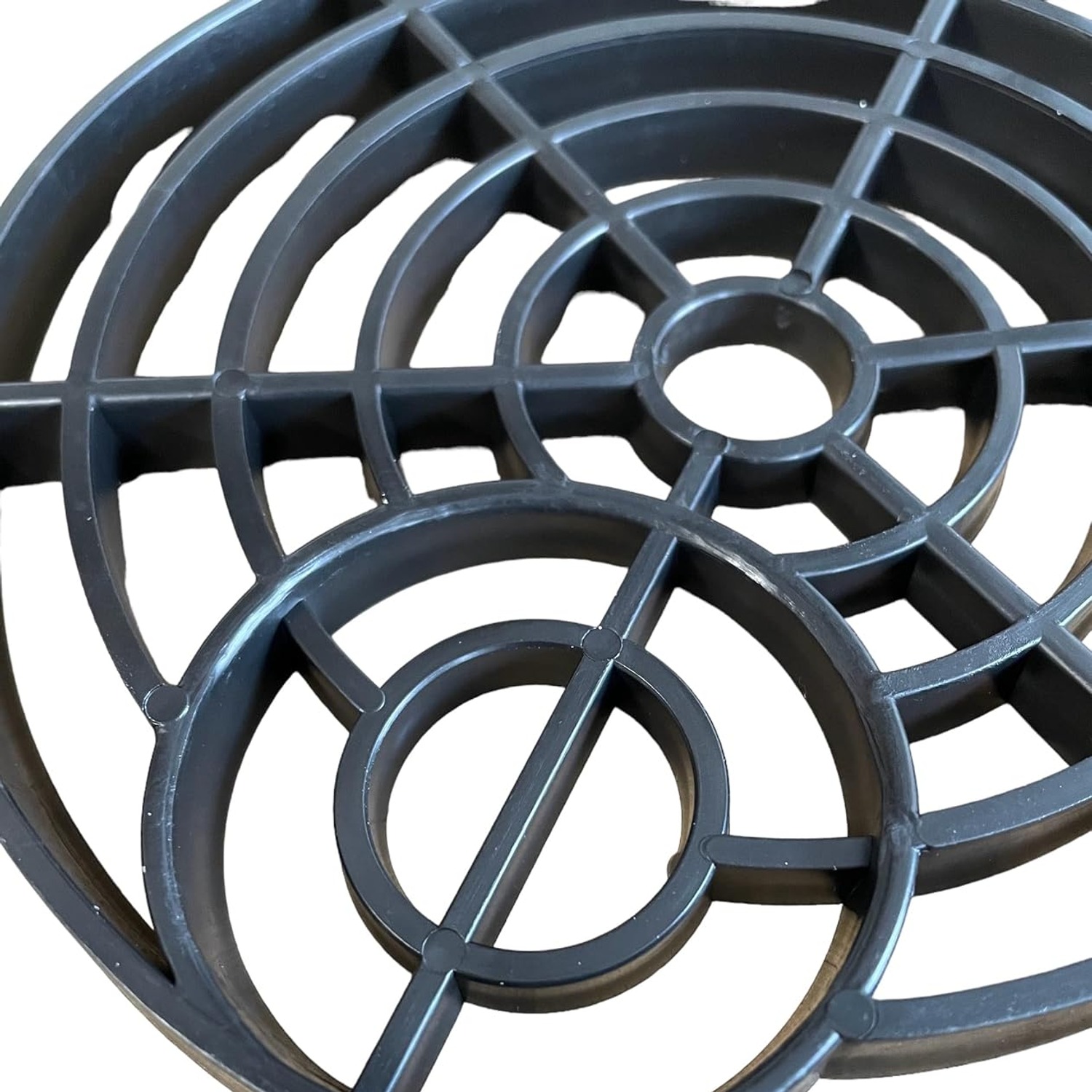
The other useful feature is the circular section in the middle of the grid. If you need to bring a waste pipe into the gully, that centre can be opened up so the pipe passes through the grate rather than dangling over the top of it.
Getting the size right
Drain openings sound standard until you go and measure one. Older properties in particular have all sorts.
Take a tape and measure straight across the opening at its widest point. Then measure the recess or lip that the old grid sat in, if there's one. If the opening is around 150mm, this grate is the right size. If it's noticeably bigger, say 200mm or more, you need a larger cover, because a grate that drops through the hole is worse than no grate at all.
A small amount of overlap onto the surround is what holds the grate in place. That's normal and correct. What you don't want is a grate perched so high that it rocks underfoot, so clear any silt out of the recess before you fit it.
Fitting it, with or without a pipe
For a straight cover, there's nothing to it. Sweep out the recess, drop the grate in, press it level and you're done. No screws, no tools, no sealant.
If you're running a waste pipe through, take your time. Mark the circular section in the centre, then cut it out with a sharp knife or a small saw. Work in small stages and keep offering the pipe up. A snug hole grips the pipe and keeps it from wandering, while an oversized one lets it flop about and defeats the point.
This is the tidy way to finish a washing machine outlet, a boiler condensate pipe or a sink waste that currently just hangs over the gully and splashes the wall. The pipe sits where you put it, the grate still catches leaves around it, and the whole thing looks deliberate instead of improvised.
Who this suits
It suits anyone with an open gully at the back of a house, at the bottom of a downpipe, beside a shed, or in a small yard. If you've trees anywhere near, it earns its cost in the first autumn.
It's also the obvious buy when a grid has cracked or gone missing entirely. Replacements for a standard 6 inch drain aren't usually stocked in a hurry, and people end up laying a paving slab over the hole instead, which blocks the water as effectively as it blocks the leaves.
Where it doesn't suit is anywhere heavy loads run. No vehicle load rating is given for this grate, so keep it away from driveways, parking bays and anywhere a delivery van might swing a wheel. For those spots you want a heavy duty cover with a published load class. This is the best small drain cover for foot-traffic areas, not for a hard standing.
What a grate will and won't stop
Set expectations sensibly. The grid catches leaves, twigs, small stones and larger grit. That's the material most likely to block a bend.
It won't catch fine sand and silt, because the slots have to be open enough for water to get through fast during heavy rain. Fine material passes into the gully and settles in the trap, where it's much easier to scoop out than it's to clear from a pipe run.
It also doesn't seal the drain. If you've a smell coming up from the gully, the cause is usually a dry or broken trap, not a missing cover. A grate helps by keeping rotting leaves off the surface, but it isn't an odour seal.
Keeping it working
Cleaning is the difference between a grate that helps and a grate that makes things worse. A grid packed solid with wet leaves stops water dead.
Once a month is enough in most spots. In autumn, check it weekly and after any windy night. Lift it out, tip the debris into the bin, rinse it under a hose, and give the slots a scrub with a stiff brush if silt has packed in. Then look down into the gully while it's open and scoop out whatever has collected in the trap.
Skip harsh solvents. Plain water and a brush do the job, and strong chemicals can attack plastic over time. Refit the grate flat and level, with nothing standing proud where someone could catch a toe.
Outdoors, everything wears eventually. Years of strong sun will take the edge off any plastic moulding. Treat a grate as a wearing part, check it for cracks each time you clean, and replace it when it starts to feel brittle rather than waiting for it to fail.
Buying more than one
Most houses have more than one gully. There's often one under the kitchen waste, another at a downpipe, and sometimes a third along a side path. If you're ordering, it's worth walking round with a tape and counting them before you check out, because a single grate arrives and you immediately notice the other two holes.
Each pack contains one grate. Having a spare on the shelf is sensible if your drains sit under trees, since the one you've out for cleaning can be swapped straight over.
The short version
An open gully fills with debris, and clearing a blocked one is a much bigger job than covering it. This 150mm round drain grate is a rigid PVC grid for a standard 6 inch drain, 15 x 15 x 1 cm, weighing 0.05 kg, in black.
Measure your opening first. If it's close to 150mm, drop this in and it'll do its job with no fixings and no fuss. If you also need to run a waste pipe into the gully, open up the circular centre and the pipe passes through securely.
Clean it regularly, keep it off driveways, and it'll quietly save you the worst chore in the garden.