
The complete guide
How to Choose a Square Gully Grid That Actually Fits
The problem with an open drain
Most outdoor drains work perfectly right up until the day they don't. A gully sits at the base of a downpipe or at the edge of a patio, water runs into it, and nobody thinks about it again. Then autumn arrives.
Leaves land in the opening. Grit washes down off the roof with the rain. Moss breaks loose from the tiles. All of it collects in the same small space, mats together, and forms a plug. The first sign is usually water sitting where it shouldn't, a puddle spreading across the paving or a wet patch creeping toward a wall.
Clearing that mess is unpleasant. You're kneeling on cold wet paving with your arm down a pipe, pulling out something that smells like a pond. The fix is much simpler than the cure. Put a grid over the hole so the debris never gets in.
What a gully grid actually does
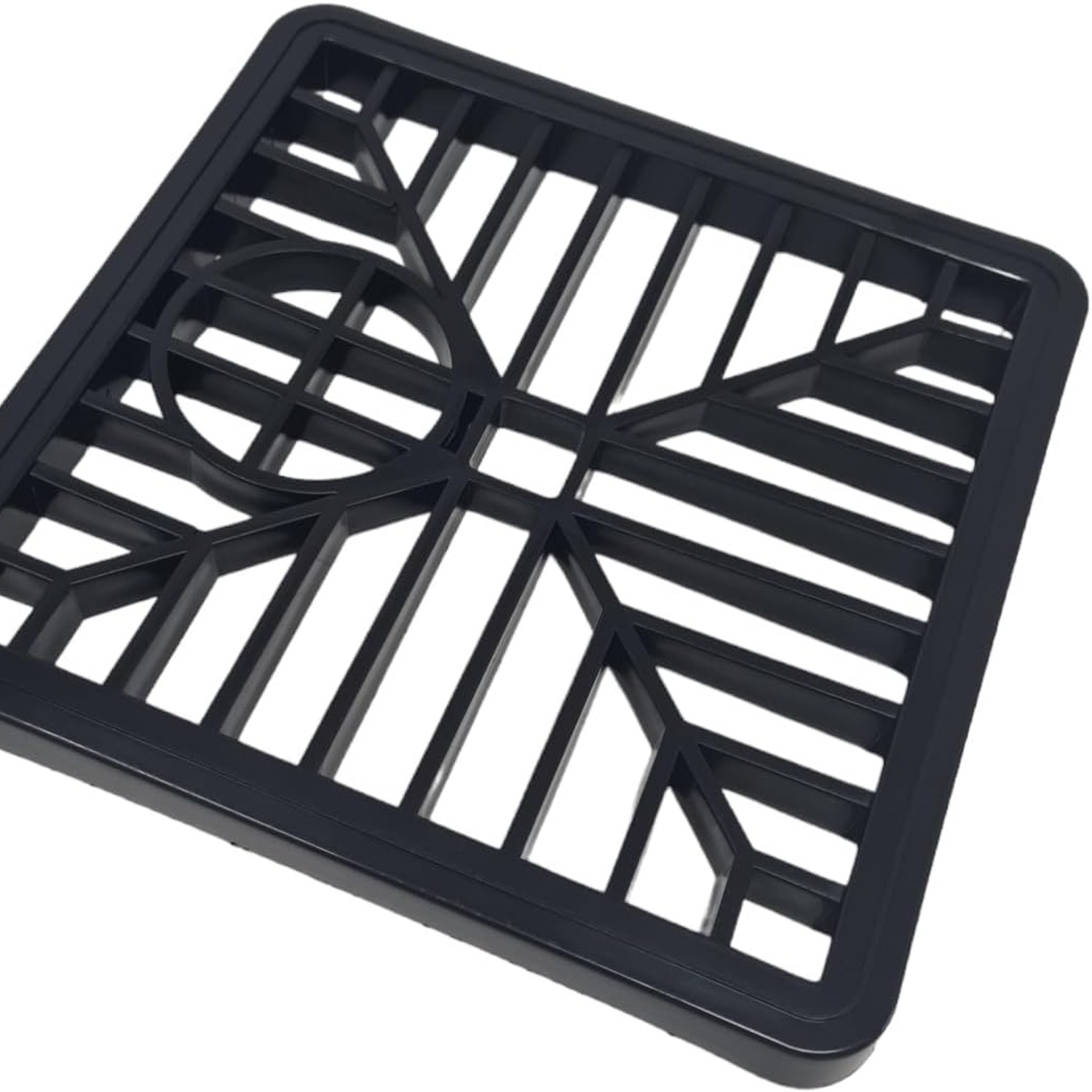
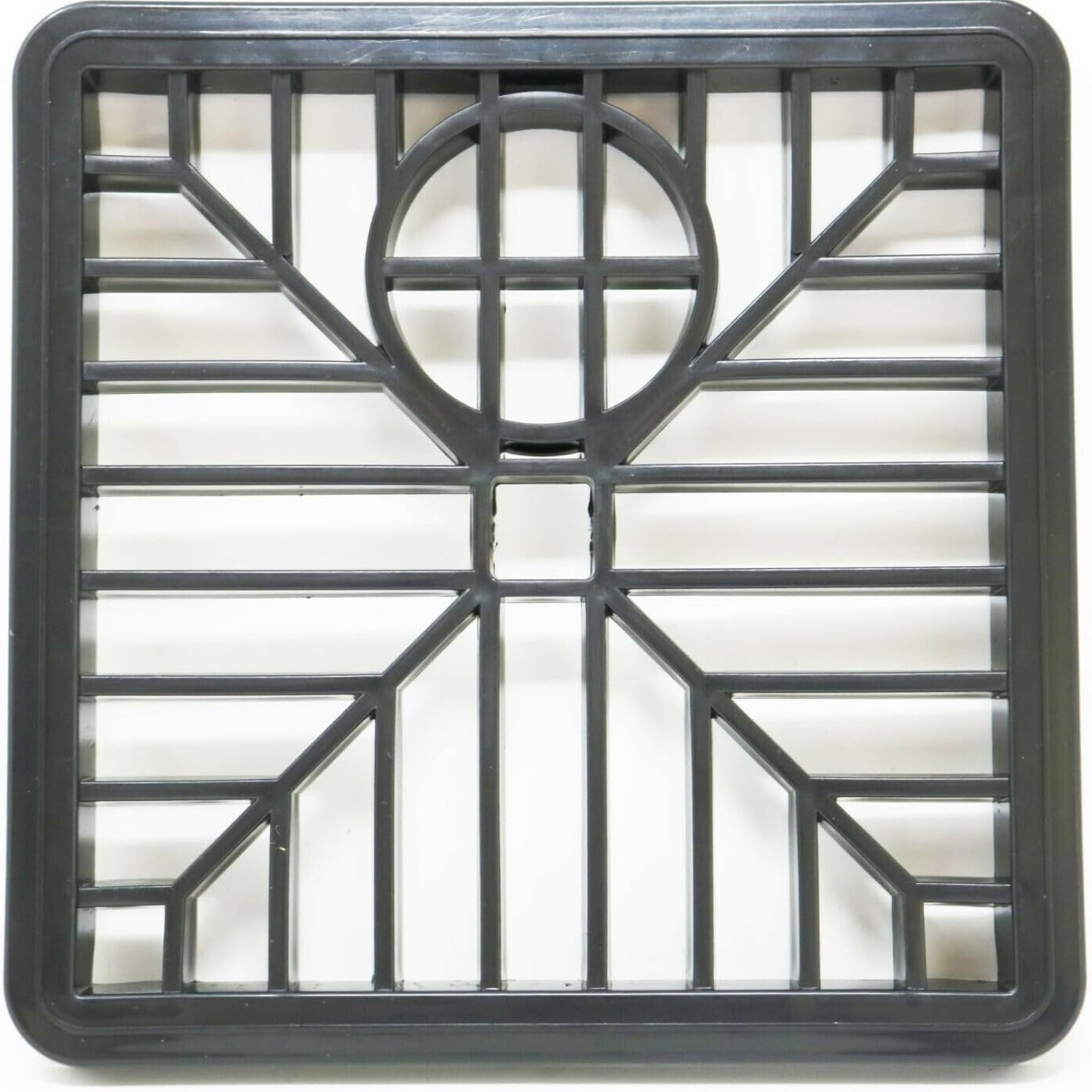
The job is straightforward. A grid covers the opening with a pattern of bars and gaps. Water is small enough to slip through the gaps. A leaf isn't.
Debris collects on the top face instead of falling into the gully chamber. That matters, because debris sitting on a grid is visible and easy to sweep away, while debris in the chamber is invisible until it becomes a blockage. A grid turns a hidden problem into a two-second job with a broom.
It's worth being clear about what a grid doesn't do. It doesn't seal the drain. It doesn't stop smells, because odour comes from the trap below and needs an entirely different fix. It doesn't filter fine sand or silt, which will always wash through the gaps. And a light plastic grid isn't a load-bearing cover, so it belongs on foot traffic areas and never where a car crosses.
Why plastic instead of metal
Traditional gully grids were cast iron. They look right on an older property and they have real weight to them, which some people prefer.
The trouble is rust. Iron sitting in a wet recess for years corrodes from the inside out. Two things follow. First, the corrosion runs, and rusty water leaves brown streaks down pale paving, render and brickwork that are stubborn to remove. Second, the grid seizes into its seat, so the one thing you bought it for, lifting it out to clean, becomes a job with a screwdriver and a lot of swearing.
PVC sidesteps both. It doesn't corrode, so nothing stains the surround, and it never welds itself in place. It stays light enough to lift with one hand, which sounds trivial but is the difference between cleaning the drain monthly and putting it off. If you're after the best plastic drain cover for a domestic gully, that ease of handling is the main argument.
The trade-off is honest enough. Plastic weathers with years of sun exposure and will eventually go brittle. At this price, replacing it occasionally isn't much of a burden.
Getting the size right
This is where most gully grid purchases go wrong, so it deserves a paragraph of its own.
A drop-in grid has to be slightly smaller than the opening it covers. If it were exactly the same size it would jam on the way in or perch on the lip and rock underfoot. So the finished grid will always measure a few millimetres under the nominal drain size it's sold for.
This grid is intended for a square gully opening of roughly 150mm. The dimensions recorded on this page are 14.9 x 14.8 x 1.9 cm for the packed item, and that's the figure supplied rather than a separately verified finished measurement, so use it as your reference point.
Before you order, take a tape measure to the gully. Measure the inside of the opening across the narrowest point, not the outside of the frame, and check both directions since old surrounds can settle out of square. Write the number down. If your measurement is within a couple of millimetres of what's listed, you're fine. If it's out by more than that, buy a different size rather than hoping.
The rounded corners on this grid help here. Older gully surrounds rarely have crisp internal corners after years of weather and repointing, so a grid with softened corners tends to drop in and sit flat where a hard-cornered one catches on the edges.
Where to use one
The classic spot is the gully at the foot of a downpipe. Roof water arrives carrying moss, grit and whatever the gutters have been holding, and that mix is the single most common cause of a blocked domestic drain. A grid at the hopper catches it where you can see it.
Patio and path drains are next. These take leaf fall directly, plus soil washed off nearby beds after heavy rain. Anyone hunting for the best patio drain cover is usually solving exactly this.
Side alleys and rear yards are worth covering too. They're the drains nobody looks at, which makes them the ones that block. Garden gullies near planting benefit as well, since a grid stops loose bark and mulch disappearing into the pipe.
If you've several openings, cover all of them. One uncovered gully will still block, and you'll still be out there with your sleeve rolled up.
Fitting and looking after it
There's not much to fitting. Sweep the opening clear, drop the grid in, check it sits flat rather than rocking. No screws, no clips, no tools.
Cleaning is the routine that makes it worthwhile. Lift the grid, tip the leaves into a bin or compost, and give it a rinse with the hose. While it's out, reach into the gully and scoop out anything that has settled at the bottom, because a grid stops new debris arriving but doesn't clear what's already down there.
Once a month suits most homes. Through October and November, make it weekly if you've trees nearby. Moss and silt eventually build into the openings, and warm soapy water with a stiff brush shifts that easily. Skip solvents and harsh chemicals on plastic.
One habit worth forming: check the gully after any storm. Heavy rain moves a lot of material in a short time, and the five minutes you spend then can save a flooded path later.
The short version
A square gully grid is a small, cheap piece of plastic that solves an annoying and recurring problem. It sits over an outdoor drain opening, holds back leaves and grit, and lifts out in seconds so you can clear it.
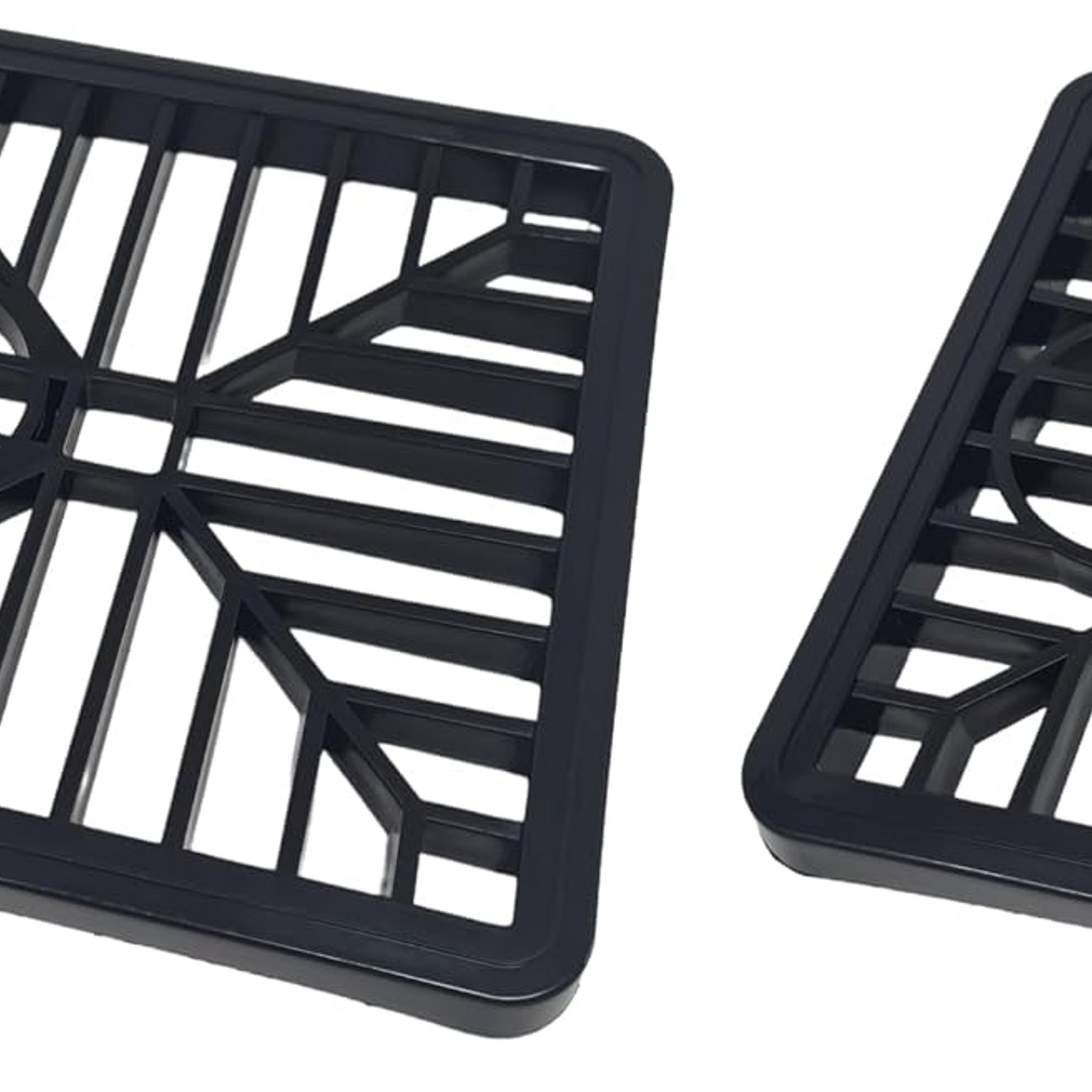
This one is moulded in PVC with rounded corners, ships as a single grid, and is sized for a square gully opening of around 150mm. Colour, product weight and country of origin aren't stated in this record, so check the images if the shade matters to you.
Measure your opening first. Order one for every gully on the property. Then rinse them off now and then, and stop thinking about your drains altogether, which is really the point.