
The complete guide
Choosing a Round Drain Leaf Guard, A Practical Buyer's Guide
The puddle by the back door
Almost every home has one drain that misbehaves. It's usually the small round gully by the back door, or the one at the bottom of a downpipe, and it starts to pool after heavy rain. People often assume the drain itself is blocked and reach for the rods. Nine times out of ten the real problem is much simpler. The little grid that used to sit on top has cracked, rusted through or vanished, and now every leaf, seed pod and handful of grit that lands nearby washes straight into the trap below.
Once that trap silts up, water backs up on the surface. In summer it's an annoyance. In autumn, when leaves are falling every day, it can become a standing puddle that stays there for weeks. A drain leaf guard is the part that stops the process before it starts.
What this grid actually does
The job of a gully grid is deliberately narrow. It's a filter, not a lid. Water needs to pass through it easily, so the bars are spaced wide enough that rain drains fast even during a downpour. What the spacing does catch is the material that causes real blockages, whole leaves, twigs, bark chips, moss that has come off a roof, and the general mess that blows across a yard.
Because it's open, some fine grit will always get through. That's normal and it isn't a fault. The trap under the gully is designed to hold a little silt, and clearing it once or twice a year is part of ordinary house maintenance. What you're preventing with a grid is the fast, heavy blockage that happens when a whole autumn's worth of leaves goes down the hole in one go.
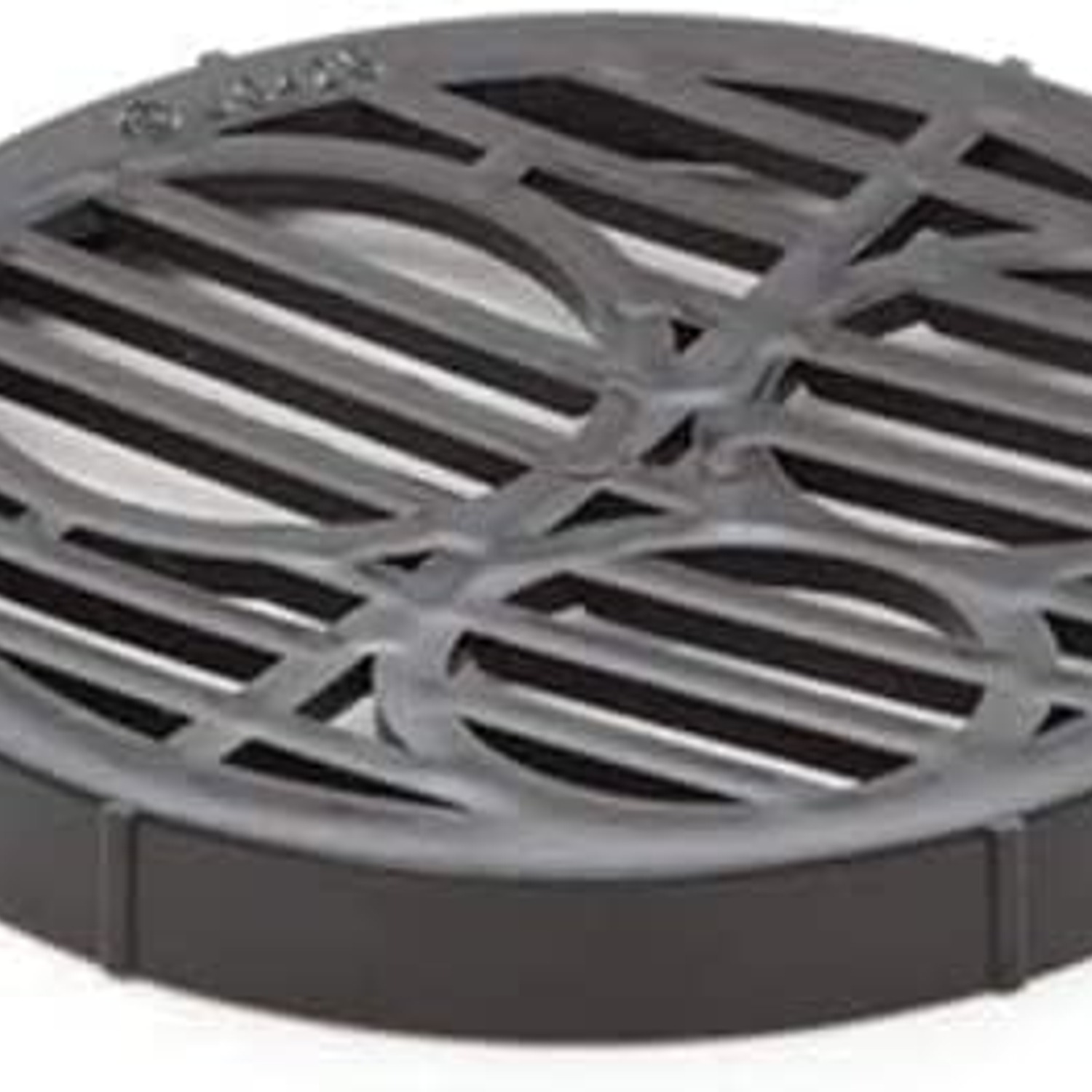
This particular cover is round, black plastic, and 7 inches across, which is 175mm or 17.5cm depending on which measurement your merchant prefers. It weighs 80 g and comes as the grid on its own, with no frame or fittings.
Measure before anything else
The single thing that decides whether a replacement grid works is the measurement. Not the brand, not the material, not the colour. Get a tape measure and lay it across the widest part of the round opening where the old grid sat. Round gullies are made to a handful of common sizes, and 7 inches is one of the most widespread on domestic drains, which is why replacement parts at that size are easy to find.
Two things to watch for. First, measure the seat, not the outside of the surrounding concrete or the paving cut. The seat is the small ledge inside the opening that the grid rests on. Second, check whether the opening is genuinely round. Some gullies look round from a distance but are square with rounded corners, and a round grid will rock in a square seat.
If your measurement comes in a long way from 7 inches, don't try to make it work. An ill-fitting grid either falls in or sits proud, and a proud grid becomes a trip hazard and gets kicked out of place.
Why plastic instead of metal
The traditional gully grid was cast iron, and plenty of them are still in service. They're heavy and they last a long time, but they have two habits people get tired of. They rust, and rust stains run down whatever is next to them. A pale patio or a painted wall next to a corroding grid picks up orange streaks that are difficult to shift. They also seize into their seat over years of weathering, and getting one out to clear the drain turns into a job with a screwdriver and some swearing.
Plastic sidesteps both problems. It doesn't corrode, so nothing stains. It stays loose in the seat, so it lifts out when you want it to. The trade-off is strength. Plastic won't take a car wheel or a heavy impact the way iron will, so it belongs in places where nobody drives and nobody stands. That covers most back yards, patios, side passages and garden borders.
Black is the sensible colour outdoors. It reads as shadow next to a dark drain opening and doesn't draw the eye across a paved area the way a light grey or white part would.
Where a light grid is an advantage
An 80 g grid sounds flimsy until you think about how often you're meant to lift it. During leaf fall, once a week is realistic. If the grid is heavy or awkward, that job quietly slides down the list until the drain floods and you have to do it anyway, in the rain, with a bucket.
A grid you can flick out with two fingers changes the habit. You walk past, notice a mat of leaves sitting on top, lift it, tip them into the green bin, glance into the trap, and drop it back. Thirty seconds. That's the whole maintenance routine for an outside drain, and doing it regularly is what keeps the gully working.
Fitting takes seconds
There's nothing to it. Lift out whatever remains of the old grid. If pieces have fallen into the gully, fish them out, because broken plastic and rusted iron fragments will happily wedge in the trap. Run a gloved hand or a small brush around the ledge to clear grit, since a build-up there stops a new grid sitting flat.
Then drop the new one in. It should sit level with only a little movement. If it rocks noticeably, the ledge probably still has debris on it. Clear it again rather than forcing the grid down.
Keeping it working
Cleaning is simple. Lift, shake off the loose material, then rinse with a hose. If there's compacted silt between the bars, a stiff brush and warm soapy water clears it. Avoid solvents and strong cleaners, since there's no need for them and they can dull plastic over time.
Two seasonal notes. In winter, if ice has formed around the edge, pour warm water over it before lifting rather than levering it up with a metal tool. Plastic under point pressure in the cold is where cracks start. In spring, take a moment to scoop the trap below while the grid is out, because a winter's worth of grit will have settled there.
Who this suits, and who it doesn't
It suits anyone with a standard round domestic gully that has lost its grid, especially near a back door, under a downpipe or set into a path. It works as a garden drain cover in a border, though soil clogs faster than paving grit so you'll clean it more often. It's a good replacement gully grid for a rented home because nothing is drilled or altered.
It isn't the right choice for a driveway, a commercial yard, or anywhere vehicles cross. No load rating is given for this cover, so treat it as a debris guard only. It's also not a pest barrier and it isn't a smell fix. If your drain smells, the trap has usually dried out, and a bucket of water down the gully sorts that.
The short version
Check the opening measures close to 7 inches and is genuinely round. If it does, this black plastic grid drops in with no tools, catches the leaves and twigs that block drains, and lifts out in a second when you want to clear it. It won't rust, won't stain your paving, and is light enough that cleaning it never feels like a job. Keep it clear through autumn and the drain by your back door stops being something you think about.